Aligning Tradition and Timing in a Hindu Wedding Ceremony: How to Create a Meaningful, Well-Guided Experience
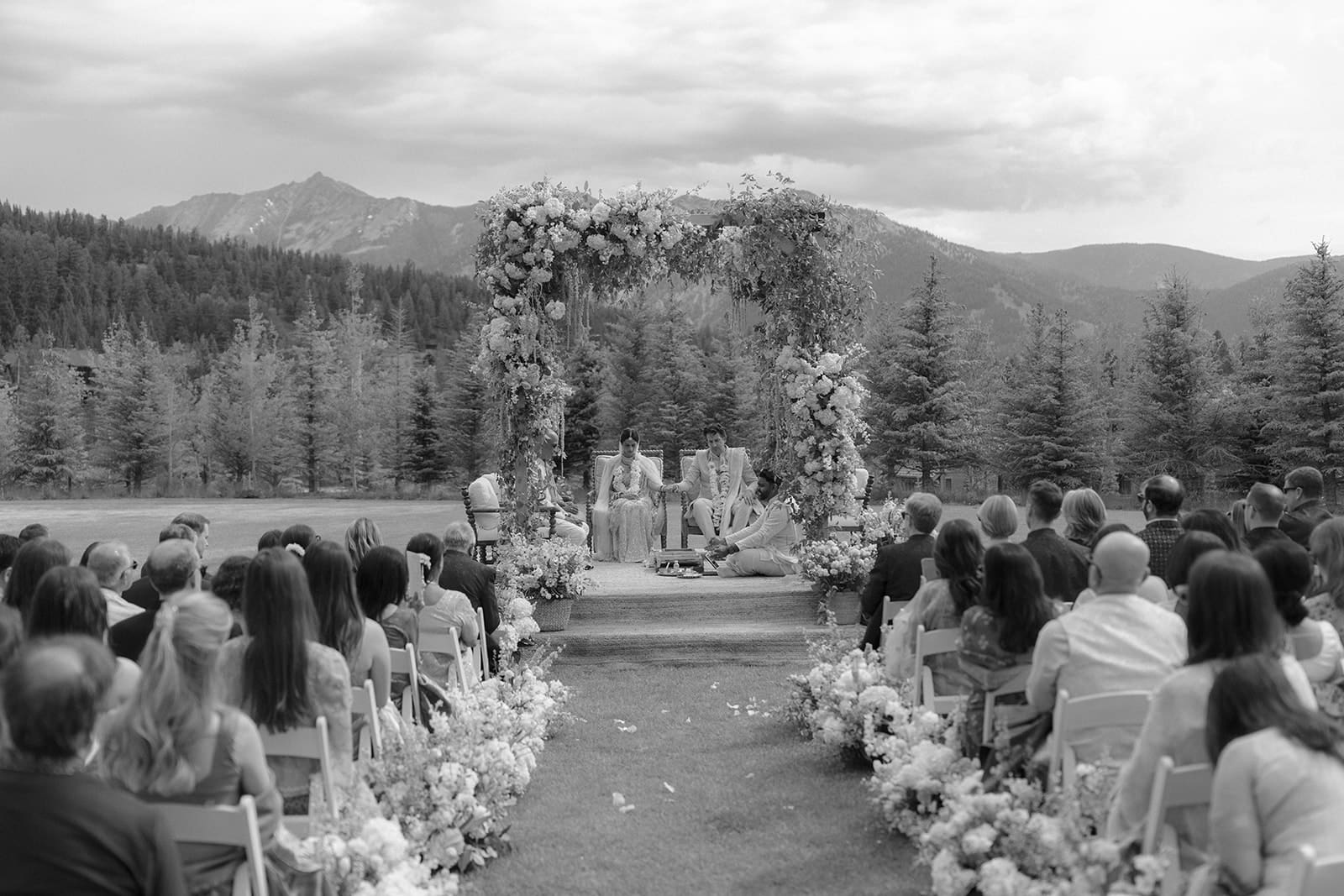
A Hindu wedding ceremony is one of the most sacred and emotionally significant parts of a wedding weekend. It is rich in symbolism, layered in tradition, and designed to honor not only the couple, but also their families, ancestry, and spiritual beliefs. For many couples planning an Indian wedding or multicultural wedding, the ceremony is not just another event on the timeline. It is the heart of the celebration.
But here is where many couples and families run into tension.
In modern weddings, especially luxury Indian weddings, South Asian weddings, and multicultural Hindu weddings, there is often a gap between what is discussed during planning and what actually unfolds on the wedding day. When expectations around ceremony length, pacing, language, guest engagement, and family participation are not aligned early, the result can feel disjointed, stressful, or emotionally draining.
At Eventrics, we believe a ceremony should feel sacred, structured, and deeply personal. It should never feel chaotic, unclear, or disconnected from the people gathered to witness it.
In a recent episode of For Real, I Do., Brittany sat down with guest speaker Pandit Neall to unpack one of the most important conversations couples need to have before the wedding day: how to align tradition, timing, and guest experience in a way that protects the meaning of the ceremony while honoring the realities of a modern celebration.
WHY CEREMONY ALIGNMENT MATTERS IN AN INDIAN WEDDING
For couples planning a Hindu wedding ceremony, there are often several priorities happening at once:
The couple wants the ceremony to feel meaningful and intentional.
Parents want traditions honored with reverence.
Guests may come from different faiths, cultures, and backgrounds.
The venue timeline may allow only a certain amount of time.
The planning team is working to keep the wedding day flowing smoothly.
None of these goals are wrong. In fact, they are all valid.
The issue begins when those priorities are not clearly discussed in advance.
As Pandit Neall shared in the podcast, if anyone is surprised on the day of the wedding, whether that is the couple, the family, or the planner, then something in the preparation has been missed. A well-led Hindu wedding depends on structure, clarity, and communication from all parties involved.
That means couples need more than a general conversation about the ceremony. They need intentional discussions about what the ceremony includes, who will participate, what the pacing should feel like, and how the experience will be delivered to both the family and the guests.
A HINDU WEDDING CEREMONY SHOULD BE STRUCTURED, NOT REACTIVE.
One of the strongest takeaways from Brittany and Pandit Neall’s conversation was this: flow matters.
A ceremony cannot move with grace if no one knows who is stepping onto the mandap, when the parents are being called forward, where the garlands are, who has the rings, or what ritual comes next. These may sound like small oversights, but in real time they create delays, confusion, and visible friction.
During a South Asian wedding ceremony, every person involved should know their role ahead of time. That includes parents, siblings, grandparents, readers, and anyone assisting with ceremonial items. When the sequence is understood in advance, the ceremony feels held. It moves with intention. It allows the couple to stay present.
This is especially important for couples planning a destination Indian wedding or luxury multicultural wedding, where timelines are tighter, production is more layered, and every transition affects the rest of the day.
Proper ceremony planning is not about removing tradition. It is about creating the conditions for tradition to land the way it is meant to.
THE REAL REASON HINDU WEDDING CEREMONIES FEEL SO LONG TO GUESTS
Ceremony length has become a major point of discussion in modern Indian wedding planning.
Years ago, a two-hour Hindu wedding ceremony may have felt standard. Then that shifted closer to ninety minutes. Today, many couples ask whether their ceremony can be thoughtfully guided in forty-five minutes to an hour.
This is not because couples care less about tradition.
It is because weddings have changed.
As Pandit Neall explained, modern couples are balancing shorter guest attention spans, venue time restrictions, and a stronger desire for their guests to actually understand what is happening. Over time, many officiants and priests have also become more skilled at identifying the core elements of the ceremony and delivering them with greater clarity and efficiency.
That does not mean every ceremony should be short. It means every ceremony should be intentional.
If a couple wants live music incorporated into the ceremony, additional readings, cross-cultural traditions, or a more devotional format, then the timeline may need to expand. If they want a ceremony that is concise but still meaningful, the non-essential elements may need to be reduced.
The key is knowing the priority.
Do you want the shortest possible ceremony?
Do you want the most educational ceremony?
Do you want a deeply devotional ceremony?
Do you want a balanced ceremony that speaks to both family tradition and guest understanding?
These are not small questions. They shape the entire experience.
SANSKRIT AND ENGLISH BOTH HAVE A PLACE IN A MODERN HINDU WEDDING
For many couples planning a multicultural Hindu wedding, one of the biggest questions is language.
Pandit Neall put it beautifully in the episode: Sanskrit carries the vibration, while English carries the understanding.
That distinction matters.
Sanskrit is not optional decoration. It is foundational to the spiritual integrity of a Hindu wedding ceremony. It holds lineage, meaning, and sacred precision. At the same time, many modern wedding audiences include guests who are not Hindu, not Indian, or simply not familiar with the significance of each ritual.
When no explanation is offered, the ceremony can become visually beautiful but emotionally inaccessible.
Pandit Neall described this as a missed opportunity, not only for non-Indian guests, but even for Indian guests who may have grown up attending ceremonies without ever fully understanding them. His life’s work, as he shared, has been to help bridge the gap between ancient tradition and modern understanding so that guests walk away saying, “I learned something today,” or “I finally understood the beauty behind that ritual.”
That is the gold.
For couples, this means one of the most important planning conversations is deciding how the language balance will work. Not whether Sanskrit should be used, but how Sanskrit and English can work together.
A strong Indian wedding planner and an experienced priest can help couples decide:
How much of the ceremony should remain primarily devotional
Which rituals would benefit from concise explanation
How to keep the room engaged without over-narrating
How to honor tradition without losing the audience
When done well, explanation does not weaken the ceremony. It deepens it.
NOT EVERY PRIEST IS AUTOMATICALLY THE RIGHT FIT FOR A WEDDING
This part of the conversation was especially honest, and very important.
Pandit Neall made the point that a priest may be deeply knowledgeable, spiritually grounded, and beloved by a family, but still not be the best fit for a wedding setting. That is not an insult. It is simply a matter of context.
A priest who performs family pujas or home rituals may not regularly work inside the constraints of a luxury wedding timeline, a venue production schedule, a mixed-faith guest list, or a tightly structured wedding weekend. A wedding requires more than knowledge of the rituals. It requires the ability to guide those rituals in a live setting with timing, audience engagement, flexibility, and flow in mind.
That is why couples planning a Hindu destination wedding or multicultural wedding ceremony should vet their officiant as carefully as they vet any other key vendor.
According to Pandit Neall, couples should feel comfortable asking:
How many weddings have you performed?
How long have you been officiating weddings?
Can you provide references from past couples?
How do you approach language and explanation during the ceremony?
How do you adapt for multicultural or multi-faith weddings?
How do you handle timing expectations?
These are not rude questions. They are responsible ones.
A ceremony is too important to leave to guesswork.
GUEST EXPERIENCE IS NOT SEPARATE FROM CEREMONY DESIGN
In the wedding industry, “guest experience” is often discussed in terms of food, entertainment, hospitality, and design. But Brittany and Pandit Neall made an important point in this episode: the ceremony itself is a major part of the guest experience.
If guests do not know what is happening, if there are repeated delays, or if the ceremony loses momentum, they feel it.
Pandit Neall shared that when he attends weddings as a guest, he can immediately sense when there is disorganization. He has watched guests whisper to each other, try to explain rituals among themselves, or quietly comment that the wedding looked beautiful but they wished they understood what was happening.
That should matter to couples, especially those hosting a multicultural wedding where many guests may be witnessing a Hindu marriage ceremony for the first time.
A ceremony that is well-guided does not just honor tradition. It invites people into it.
THE BEST HINDU WEDDING CEREMONIES ARE TEAM EFFORTS
One of the most important truths from this conversation is that the priest is not separate from the team. The priest is part of the team.
That means the most successful ceremonies happen when the wedding planner, the priest, the couple, and the family are working in unison.
At Eventrics Weddings, this is something we care deeply about. Brittany spoke in the episode about the respect required in supporting the priest properly, making sure ceremonial items are ready, the mandap is prepared, the timing is protected, and the conditions are in place for the ceremony to unfold as intended. That level of support is not performative. It is purposeful.
And at the same time, as Pandit Neall rightly shared, priests also have a responsibility to arrive prepared, be self-sufficient, respect the structure of the day, and collaborate with the planner rather than resist the framework.
That mutual respect is where the magic lives.
The goal is not for one person to control the ceremony. The goal is for everyone involved to deliver an exceptional experience for the couple.
WHAT COUPLES SHOULD ALIGN BEFORE THE BIG WEDDING DAY
If you are planning a Hindu wedding, South Asian wedding, or multicultural wedding ceremony, here are the conversations that matter most before the wedding day:
Start with the why. Why do you want to include a traditional ceremony? Is it deeply personal? Family-driven? Spiritual? Cultural? A meaningful ceremony begins with honest intention.
Clarify the ceremony structure. Make sure everyone understands the sequence of rituals, the key participants, and what is essential versus flexible.
Discuss timing honestly. If you want music, extra readings, multiple cultural elements, or more detailed explanations, the ceremony may need more time.
Decide on language balance. Think carefully about Sanskrit, English, and what your guests need in order to stay present and connected.
Review family dynamics. If there are sensitivities, hesitations, or mixed levels of understanding among parents and relatives, those realities should be discussed early.
Ask for references. Couples deserve transparency, especially when choosing someone who will guide the most sacred part of the day.
FINAL THOUGHTS ON PLANNING A MEANINGFUL HINDU WEDDING CEREMONY
A Hindu wedding ceremony should feel sacred, grounded, and emotionally clear. It should protect tradition without becoming inaccessible. It should honor family while still centering the couple. It should move with purpose, not confusion.
That kind of experience does not happen by accident.
It happens through intentional planning, honest conversations, aligned expectations, and the right team.
At Eventrics, this is exactly the kind of work we care about most. We believe the most meaningful weddings are not the loudest. They are the most considered. And when ceremony design is approached with clarity, cultural respect, and thoughtful leadership, the entire wedding weekend feels different.
Because this is not about doing less.
It is about doing what matters most, with purpose.
If you are planning a luxury Indian wedding, South Asian destination wedding, or multicultural wedding and want a team that understands how to protect both tradition and experience, Eventrics is here to guide the process with care.
Whether you’re newly engaged, navigating a multi-day South Asian wedding, or simply looking for honest guidance from industry experts, For Real, I Do. is your trusted resource for planning with confidence. Each episode brings together experienced professionals who share practical advice, real conversations, and behind-the-scenes insights to help you create a celebration that feels authentically yours. Listen to this episode and explore the full library of conversations on Spotify, Apple Podcasts, or YouTube. And if you enjoy what you hear, be sure to subscribe, leave a review, and share the podcast with someone beginning their own wedding planning journey.
